

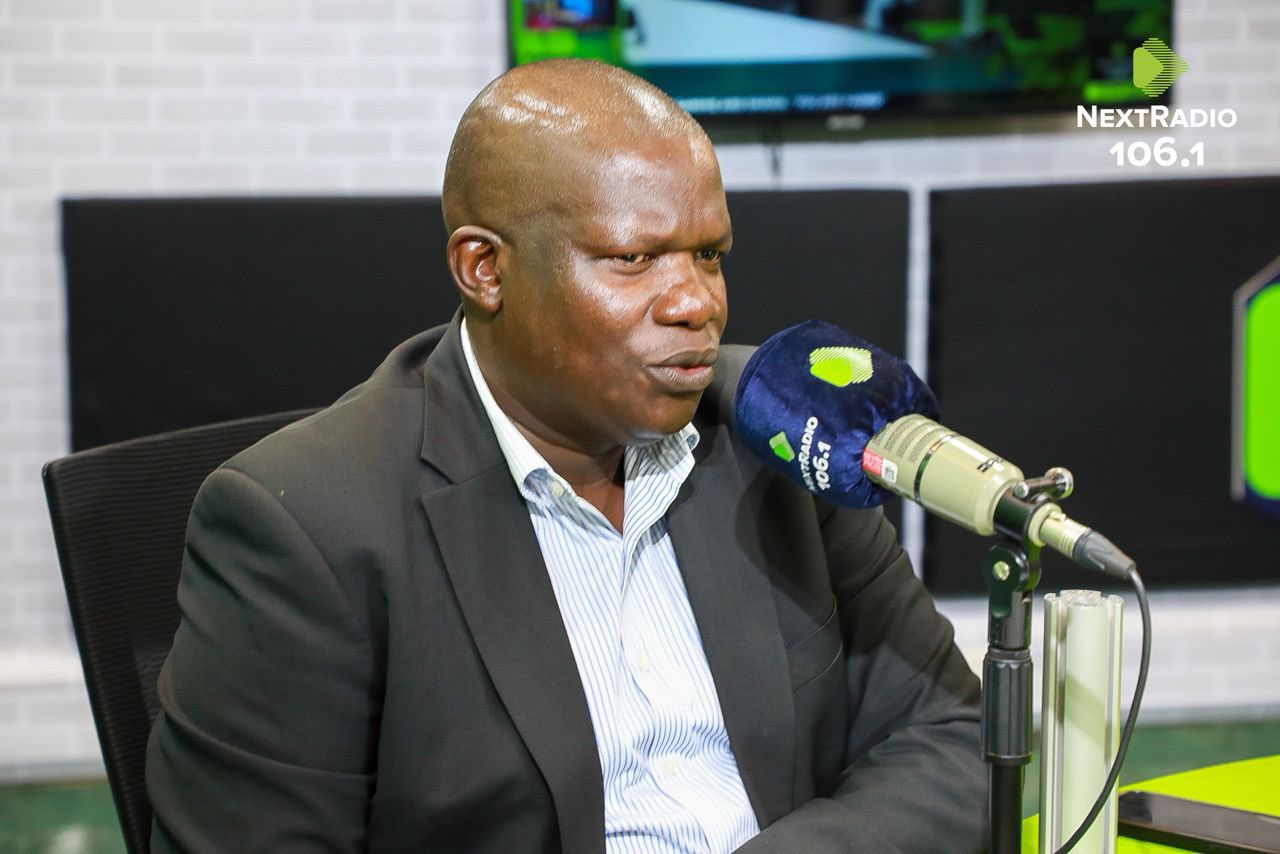
Former Kampala Capital City Authority (KCCA) Lord Councillor Kennedy Okello has criticised restrictions on political party financing in Uganda, arguing that the current legal framework places opposition parties at a disadvantage while the government continues to benefit from external funding.
Speaking on Monday to Canary Mugume during Next Big Talk on Next Radio, Okello, a member of the People’s Front for Freedom (PFF), said the political consequences of the January 15, 2026, elections remain significant and will continue shaping the country’s political climate.
“The effects of the recently concluded elections continue to resonate and will likely persist for some time,” he said.
Okello emphasised that political parties are vital to governance and must be able to operate in a balanced regulatory environment.
“Political parties are vehicles for governance in this country, and we must protect ourselves from direct foreign influence. We also need to have some control over fundraising for political parties; however, the current law restricts us from raising funds abroad, while also limiting internal fundraising for political parties,” he said.
He argued that these restrictions create an uneven playing field, particularly since the Ugandan government itself receives substantial foreign funding.
“We should appreciate that the government is heavily funded by foreign actors; funding that is not allowed for political parties like ours. A significant part of our budget is also funded externally,” Okello added.
Okello’s remarks come amid growing international scrutiny following the elections. On February 12, 2026, the European Parliament issued a statement strongly condemning what it described as widespread intimidation, harassment, and arbitrary detention of opposition figures after the polls.
Members of the European Parliament (MEPs) cited abuses including violence, fraud, intimidation, and a nationwide internet blackout.
They specifically referenced the treatment of opposition leaders such as Robert Kyagulanyi Ssentamu, popularly known as Bobi Wine, and jailed opposition figure Dr Kizza Besigye.
The resolution called for the “immediate and unconditional release” of all those arbitrarily detained and urged an end to military trials against civilians.
The European Parliament also demanded independent investigations into crimes against humanity allegedly committed by political and military leaders, and highlighted the need for electoral and institutional reforms.
Lawmakers further urged EU member states to support civil society, human rights defenders, journalists, and LGBTIQ+ activists in Uganda. The resolution was adopted by 514 votes in favour, three against, and 56 abstentions.
The international pressure followed developments involving Kyagulanyi, who has been in hiding since January 16, 2026, after his Magere residence was allegedly raided by military personnel.
On Saturday, Kyagulanyi announced a temporary departure from Uganda to engage the international community and the diaspora on election concerns.
“I am announcing my brief exit from the country to handle important work. Over the next few weeks, I will engage with our friends in the diaspora before returning to Uganda to continue the push for freedom and democracy,” he said via social media.
During his absence, Kyagulanyi appointed Dr. Lina Zedriga Waru, NUP Vice President for Western Uganda and recently released from prison, as acting party president.
He has openly rejected the election results, alleging manipulation by the Electoral Commission, although no substantial evidence has been provided.
Kyagulanyi has also called on supporters to engage in peaceful protests rather than legal challenges, citing lack of faith in the judiciary.
Government officials have consistently dismissed allegations of political persecution. Minister for Information and Communications Technology and National Guidance Chris Baryomunsi said the state has no intention of arresting or harming Kyagulanyi.
Prime Minister Robinah Nabbanja urged him to stop what she described as “comedy” and return to his family. Security deployments around Kyagulanyi’s Magere residence, she added, are intended to prevent public disorder, not to detain him.
According to the official results released by the Electoral Commission of Uganda, incumbent President Yoweri Museveni of the National Resistance Movement won with 7,946,772 votes (71.65 percent), while Kyagulanyi received 2,741,238 votes (24.72 percent).
Okello’s critique of the funding restrictions underscores the broader debate over electoral fairness and opposition rights, as both domestic and international actors continue to monitor Uganda’s political trajectory following the contentious elections.
